
The Trauma Parents Choose for Their Children: Is Pain the Price of Raising Resilient Adults?

Every child experiences the world through a unique emotional and psychological lens. What may appear as a minor inconvenience to one child may be deeply distressing to another. Pain is not processed uniformly; it is influenced by a child’s temperament, environment, experiences, and emotional wiring. This reality challenges parents to move away from a one-size-fits-all approach to raising children and instead become more conscious of the individual human being they are nurturing.
As the world observes International Children’s Month in June, conversations around children’s wellbeing become even more significant. Celebrating children cannot only mean protecting their physical needs; it must also include understanding their emotional worlds, the experiences that shape them and the invisible wounds they may carry into adulthood. The question is not only whether parents love their children, but whether the love they provide is aligned with what their children genuinely need.
When discussing pain and childhood development, the question becomes whether parents are raising children according to their own experiences or according to the needs of the child in front of them. A parent’s intentions may be admirable, but intentions alone do not determine outcomes. Sometimes, what a parent considers character-building may overwhelm a child, while what another parent considers protection may unintentionally limit independence. Parenting, therefore, requires an intricate balance between preparing children for the world and understanding the internal world they already carry.
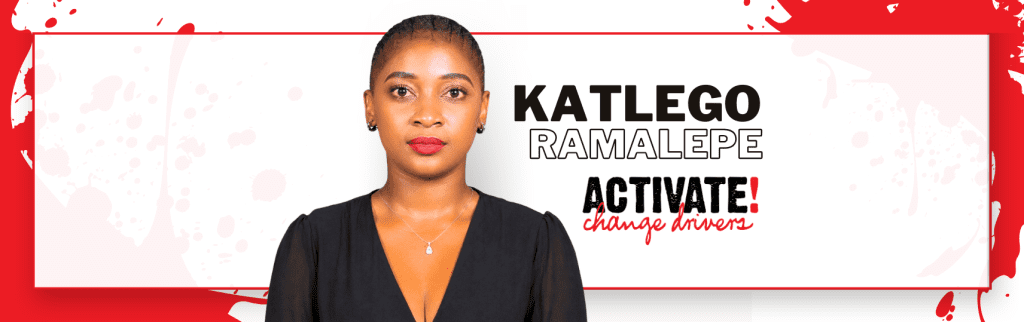
Clinical insight from trauma counsellor Katlego Ramalepe highlights the importance of recognising how pain and trauma present themselves in children. Mrs Ramalepe, a 2019 Activator who graduated from the Activate! Change Drivers programme, is also a trauma counsellor with about a decade of counselling experience. She is registered with the HPCSA and runs Seshoka Mental Health Practitioners in Polokwane and Tzaneen. Through her work in individual counselling, couples counselling, group debriefings, workshops, and psychoeducation, she has aided clients with trauma, identity, marital challenges, and gambling-related struggles. Her experience in both mental health practice and social impact spaces provide a valuable perspective on how individual healing and community transformation intersect. She explains that children may express pain through aggression, withdrawal, reckless behaviour, changes in eating and sleeping patterns, and even bed wetting.
Mrs Ramalepe emphasises that parents should pay attention to these behavioural shifts because trauma can affect a child’s emotional regulation. She explains that children who experience pain or trauma require emotional security and support, with co-regulation playing a crucial role in helping them manage difficult emotions. This means that parents should not only ask, “How do I correct this behaviour?” but also, “What is this behaviour communicating about my child’s internal experience?”
The uncomfortable reality is that every parent will leave some form of imprint on their child, whether intentional or not. My own childhood experiences shaped this reflection. Growing up without my biological parents consistently present in the same household and relying on extended family created a complicated relationship with belonging. I often felt like an outsider, which contributed to an imposter syndrome that pushed me to overcompensate to be recognised. Looking back, that pain produced certain strengths, but it also left wounds I must consciously address.
Because of those experiences, my instinct as a future parent is to create the opposite environment for my children. I want them to experience stability, belonging and the assurance that they are fully provided for. However, that decision also carries a responsibility. If I protect them from every struggle, I may unintentionally create a different challenge for them: difficulty navigating discomfort, rejection, or hardship when they meet it later in life.
Mrs Ramalepe provides an important correction to the idea that parents deliberately choose trauma for their children. She explains that parents do not consciously choose trauma, and that trauma transfer often happens through unconscious processes where unresolved experiences influence parenting patterns. According to her, the issue is often not limited options, but a lack of awareness and knowledge about healthy parenting strategies. The family environment and wider societal conditions both shapes how children develop.
This brings the conversation to intentional parenting. There is a difference between deliberately causing harm and recognising that every parenting choice has consequences. Mrs Ramalepe explains that healthy parenting involves psychoeducation, responsiveness, allowing room for mistakes and repair, and understanding that every child needs a unique approach. Children do not need perfect parents; they need “good enough” parents who are willing to learn, adapt and meet their needs.
The debate around providing children with everything they need also deserves attention. Does a child who never experiences lack become fragile? Mrs Ramalepe argues that children must eventually learn that the world holds limitations and rejection. A child who has never met a “no” at home may struggle when the world inevitably presents one. Resilience is not created by suffering alone, but by learning how to navigate challenges within a secure environment.
The goal of parenting should not be to manufacture hardship, nor should it be to create a life completely insulated from difficulty. The goal should be awareness. Parents must understand their own histories, recognise their children’s emotional needs, and make conscious decisions about the environments they create. The trauma children carry into adulthood should not be the accidental inheritance of unresolved wounds, but the result of thoughtful parenting that equips them to engage with the complexities of life.
During International Children’s Month, the responsibility of raising emotionally healthy children deserves deeper reflection. Children are not only shaped by what parents provide materially, but also by the emotional environments they create. The greatest gift parents can offer may not be a life without difficulty, but the awareness, support and guidance needed to help children navigate difficulty when it arrives.
For professional support on trauma, parenting, identity, relationships, and emotional wellbeing, Katlego Ramalepe can be contacted through Seshoka Mental Health Practitioners on 071 571 6685 or via email at seshokamhps@gmail.com.
———————————–
About the Author:
Mpho (MrSir) Matlhabegoane is a member of the ACTIVATE! Change Drivers Writers Hub. He became an Activator in 2019. He is a Mental Health Awareness Advocate, and to spread mental health awareness, he authored and published three books that are accepted by Gauteng Department of Education as of 2026, namely: The Story of MrSir (Word For The Record), Expanding The World Of Nerds, and Views and Emotions (Poetry Journal of MrSir).



Responses