
Breaking Barriers: Kamogelo Themba’s Journey As A Transgender Leader


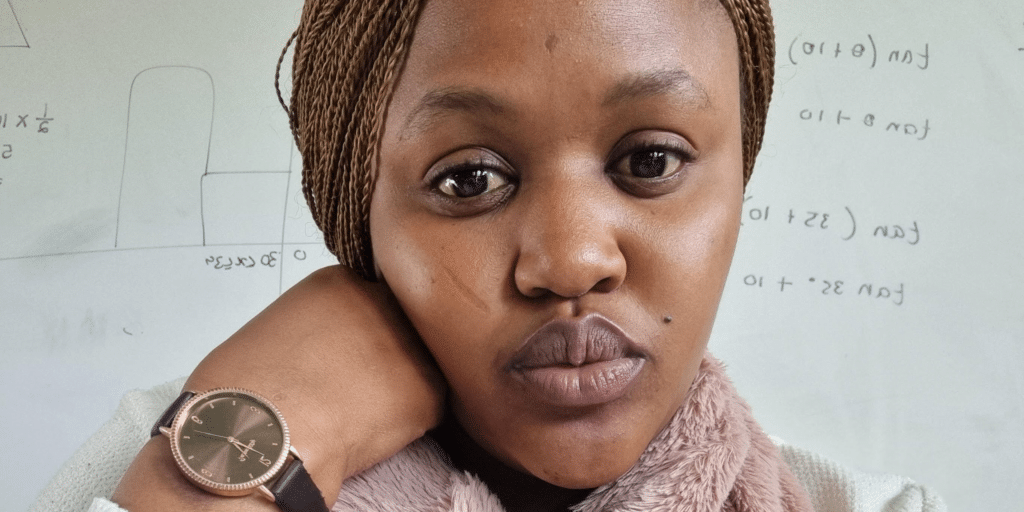
Kamogelo Themba is a 2019 Activator from Gauteng Ward 71. She is transgender woman who was born and raised in Limpopo, Matome Village and later relocated to Attridgeville in Tshwane. She is contesting in the upcoming local elections under the United Independent Movement (UIM).
Kamogelo’s understanding of community leadership is deeply rooted in her upbringing. She grew up in a poor household where her mother had to sell vegetables to provide for the family. She grew up witnessing children go to school without food, witnessing gender-based violence (GBV) in homes, and seeing youth with no jobs.
Her values were shaped by her mother and community elders who shared the little that they had and have become her biggest influencers. Through them, she learnt the spirit of Ubuntu: “I am because we are”.
One word that Kamogelo would use to describe her community is resilient. This is because despite poverty, crime, GBV, and youth unemployment, the people of Ward 71 wake up each day to share food, protect each other’s children and volunteer their time without compensation. They never give up.
As a 2019 graduate of the ACD-In community programme, she was introduced to values-based leadership, which is grounded in honesty, accountability, servant leadership and faith in action. It taught her to lead with principles, not popularity; to plan community projects; and to understand local government structures and how to serve with integrity.
Her work has extended beyond the program. Kamogelo currently leads Compassion Foundation NPO 233-164, with 100 volunteers protecting 20 schools and feeding 220 children daily with no stipend and no office. They do the work government should do, but without power. Through this work, she has witnessed first-hand the gaps between community needs and available resources.
She voices out that she is tired of reporting problems that never get solved. It is for this reason that she is contesting in the upcoming local elections; she believes it is time to move from complaining to deciding- to bring a transparent budget, resources and honest services to Ward 71. Her experience on the ground makes her more knowledgeable about the challenges of the residents and the gaps that need urgent attention.
For Kamogelo, public service means putting Bana Pele- Children First. It is serving without stealing, listening before leading, and being available even when there is no camera.
“It is not a tender; it is a calling to protect the vulnerable,” she says.
As a young person who identifies as a part of the LGBTQI+ community, entering local government means bringing her full self to service.
She started her transition journey in July 2023, and that journey has taught her resilience, honesty and compassion. Entering local government at this stage in her life means she is not asking for a seat at the table; instead, she is bringing a chair for others who have never been invited. It means proving that leadership is not about how you identify, but about how you serve. Bana Pele- Children First- that includes queer children.
Kamogelo believes her sexuality affects how people address her and their trust in her. Some people judge her leadership before they hear her ideas because she is a trans woman. They question her morality instead of capability. There are others who trust her more because she has lived discrimination- they know she will fight for fairness for everyone.
She does not lead because she identifies as LGBTQI+, but she leads because of what that has taught her- to listen to the invisible and to protect the vulnerable.
According to Kamogelo, being a trans woman does not mean she fights to represent the LGBTQI+ alone, but instead she represents all people regardless of sexuality. When she fights for safe schools, she fights for all children, including the trans child who is being bullied. When she fights against GBV, she fights for all women, including trans women like her. When she fights for jobs and clinics, she fights for everyone in ward 71. Her LGBTQI+ identity makes her sensitive to exclusion, but her mandate is to serve all. Ubuntu says Motho ke motho ka batho.
Kamogelo highlights one misconception that most people have about people who identify as part of LGBTQI+. It is that they are only in leadership positions to represent issues that affect them alone or that they want special rights. That is false. Instead, they want equal rights and equal service. A misconception is that they are distracted by their identity, but the truth is that they are focused by it. They know what it means to be left behind, so they try to make sure no one is left behind.
The biggest challenges requiring urgent attention and how Kamogelo would go about solving them in Ward 17, as identified by Kamogelo, are:
- Child safety and drugs: Learners are robbed, raped and recruited to drugs on their way to school. To solve this, Kamogelo would formalise Bana Pele Safe School Patrol- providing stipends, uniforms, and working with SAPS, CPF and schools for zero crime rates. Establish a ward drug forum with rehabilitation.
- Youth unemployment: 70% of youth are sitting at home, turning to crime and nyaope. She would launch Bana Pele Social Enterprise Hub- sewing, baking, beauty and soup kitchen cooperatives to create 100 jobs in 12 months. Using municipal land for skills.
- GBV and hunger: Women are beaten at home and children go to bed hungry. To solve this, she would create a support soup kitchen, register survivor cooperatives for income, and enforce by-laws and a victim support desk at the ward office.
- Lack of accountability and transparency by community leaders: She would also do an IDP properly with residents, not for residents, and track spending publicly.
To bring young people on board and not use them solely on posters, she would create a Ward 71 Youth Council with real budgets for sports, arts and business; link skills to stipends and jobs, not empty promises. She would make use of social media, school visits and monthly fun clean-up campaigns, talent shows and soccer leagues where youth lead. And lastly, she would give them leadership roles in safe schools and an enterprise hub.
Kamogelo’s vision for her community after her term is for a safe, clean and working ward where no child is robbed going to school. Youth have jobs through cooperatives, not drugs; clean streets; working street lights; a community hall that is open for skills and residents that trust their councillor because they see results, not excuses.
In conclusion, we use Kamogelo’s words: “leadership is not about how you identify but how you lead”.
———————————–
About the author:
Londiwe Mnguni is an activated young person passionate about community development and social change, with a deep commitment to contributing meaningfully to initiatives that empower and uplift communities.




Responses