
The Father Behind the Paintbrush: Polelo Huma Challenges Society’s Narrow View of Modern Fatherhood

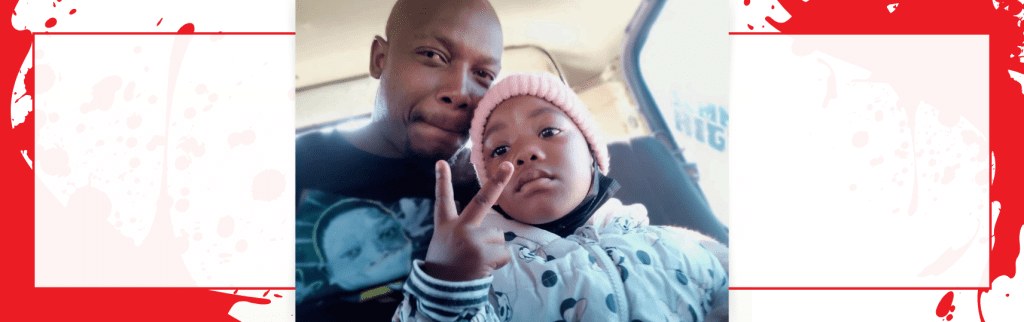
For generations, fatherhood has been measured through a simple but complicated question: “What does a father provide?” In many communities, especially within the South African context, a father’s worth has often been attached to his ability to put food on the table, pay school fees and carry the financial responsibilities of a household. While provision stays an important part of responsible parenting, the modern realities of families require a deeper conversation. What happens to fathers who want to be present but find themselves battling unemployment, separation, legal processes, or societal judgement? What does it truly mean to be a father in a world where the definition of family continues to evolve, but expectations placed on men often are still unchanged?
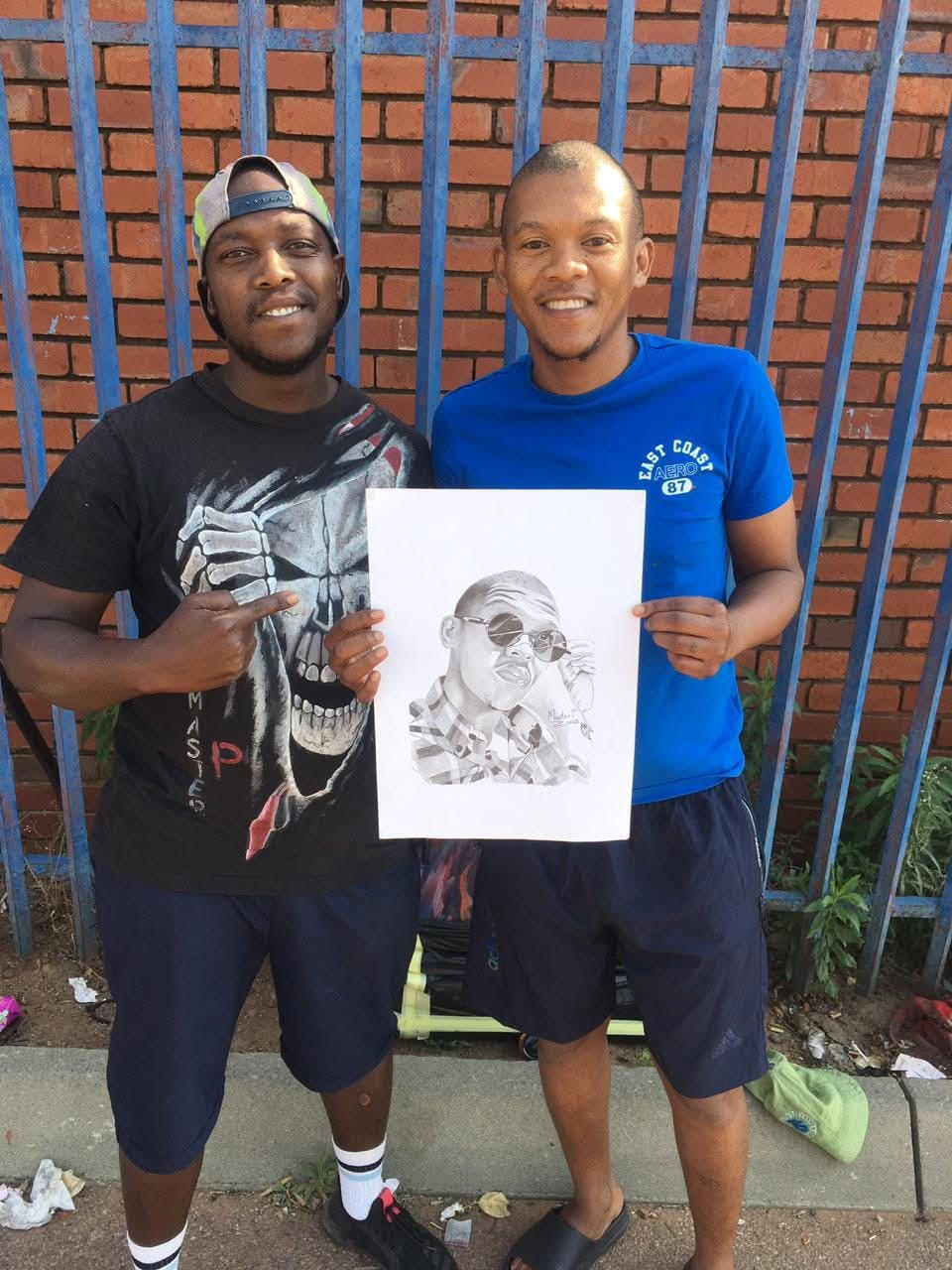
These are questions that visual artist, community activator and father Polelo J. Huma continues to explore through his own life journey. Known in the creative space as Master P, Polelo has built a name for himself through his artwork, earning recognition through platforms such as the BIC Art Master competition, Nkomo Village Art Competition and Soshanguve Crossing Mall Art Competition. However, beyond the canvas, exhibitions and creative achievements, exists a deeper responsibility that shapes his identity: fatherhood. As an Activator who graduated from the ACTIVATE! Change Drivers programme in 2019, Polelo has dedicated much of his journey towards using his skills and experiences to inspire transformation within his community. His approach to fatherhood carries the same philosophy: showing up, creating impact and leaving something meaningful behind.
“Being a father is not only about being there for your child or children financially, you have to be there for them mentally, physically and spiritually as well,” Polelo says. His words challenge a narrow understanding of fatherhood that often reduces men’s parental roles to financial contribution alone. A father’s responsibility extends beyond income and material possessions. It exists in conversations, guidance, emotional support and the simple moments where children feel seen and valued. A father who takes his child to the park, shares a meal, teaches a skill, or spends quality time with them is also contributing to the development of a child’s identity and confidence.
Interestingly, society’s relationship with Father’s Day reveals how differently motherhood and fatherhood are often discussed. When Mother’s Day arrives, the celebration is rarely questioned. The day is centred around appreciating mothers for who they are and the role they occupy. However, Father’s Day often arrives with conditions attached, with statements such as “Happy Father’s Day to all present fathers” becoming common. While recognising the importance of involved parenting is valuable, it also raises a deeper question: why does fatherhood often require more proof before it is celebrated? Does absence remove someone’s identity as a father, or should accountability and celebration exist as separate conversations?
This conversation does not ignore the damage caused by absent or irresponsible fathers. Children deserve fathers who are involved, supportive and accountable. However, it is equally important to acknowledge fathers who are making genuine efforts despite difficult circumstances. In some cases, fathers who are no longer romantically involved with the mothers of their children find themselves struggling to keep access and meaningful relationships with their children. Polelo understands this reality personally, having experienced moments where access to his children was denied. He believes this is an issue that deserves greater attention because children can become caught in conflicts created by adults.
“One of the hardest pills to swallow is that there are fathers who are denied access to their kids,” he explains. According to Polelo, some fathers find themselves having to go through legal processes to maintain relationships with their children, a difficult journey that can become even harder for those already facing financial struggles. “Some fathers even lose access after losing their jobs. And from that, they start to be called names because they cannot provide financially,” he says.
His experience, however, did not push him away from fatherhood. Instead, it strengthened his determination to remain connected with his children. Through his greatest passion, art, Polelo found a way to create memories and transfer knowledge to the next generation. “I did experience certain setbacks. Access denied. But that did not stop me from painting or drawing my future with all my kids,” he says.
For Polelo, art is not only a career. It is a language of connection. Whenever his children visit him, they play games, draw and explore creativity together. Through these moments, he is not only teaching them how to hold a brush or pencil, but also teaching them patience, imagination, and problem-solving. His children following his artistic footsteps stands for something greater than shared talent. It stands for a father intentionally leaving behind skills, values, and confidence.
This is also where his identity as a community activator becomes important. Polelo understands that fatherhood extends beyond biological relationships. Fathers are also mentors, guardians and role models who influence the communities around them. Through his creative work, he proves that young people can learn from the examples set by those around them. The same hands that create artwork can also create opportunities, guidance, and hope.
His message to fathers, especially those facing difficult circumstances, is direct: never allow hardship to become a reason to disappear from your children’s lives. “Never ever abandon your children because you are not financially stable. Be there for them. Guide them, lead them, and protect them,” he says. He acknowledges that survival is not always simple, but believes responsibility requires effort, whether through employment, entrepreneurship, learning a skill or finding honest ways to contribute.
As Father’s Day approaches, the conversation should move beyond asking what fathers have and begin asking who fathers are. A father is not only defined by a bank account, a surname, or a biological connection. A father is defined through presence, responsibility, love, and the willingness to play a meaningful role in a child’s life. Polelo Huma’s story paints a different picture of fatherhood, one where provision is important, but presence is priceless. When society allows fathers to be recognised not only for their mistakes but also for their commitment, it creates stronger families, healthier communities and future generations who understand that parenting is built through action.
——————————-
About the Author:
Mpho (MrSir) Matlhabegoane is a member of the ACTIVATE! Change Drivers Writers Hub. He became an Activator in 2019. He is a Mental Health Awareness Advocate, and to spread mental health awareness, he authored and published three books that are accepted by Gauteng Department of Education as of 2026, namely: The Story of MrSir (Word For The Record), Expanding The World Of Nerds, and Views and Emotions (Poetry Journal of MrSir).





Responses