
Moral Decay in Mzansi: Alcohol and the Dangerous Normalisation of Addiction

South Africa does not merely drink. It glorifies drinking.
We are a country where bottles are stitched into celebration, heartbreak, masculinity, grief, birthdays, funerals, and weekends that supposedly “don’t count.” Alcohol has become less of a substance and more of a social requirement. Decline a drink often enough and people start looking at you like you are the problem.
And the numbers do not exactly paint a hopeful picture.
South Africa was once ranked among the top five countries globally for alcohol consumption. During the last festive season alone, alcohol sales reportedly generated close to half a billion rand daily. That is not just consumer behaviour. That is dependency disguised as culture.
The real question is whether alcohol is shaping our society’s moral fibre — or whether society has become so intoxicated by escapism that addiction now passes as ordinary behaviour.
A shift in focus to Pinelands, a historic Cape Town suburb with a century-old tradition of remaining “dry.” Not entirely alcohol-free, but heavily opposed to off-consumption alcohol sales — meaning residents cannot casually purchase liquor to drink elsewhere.
To many South Africans, that probably sounds absurd. Restrictive, even.
But according to Ward 53 councillor Riad Davids, the community believes this long-standing tradition has helped shield the suburb from some of the social ills devastating communities across the country. Residents recently made that stance loud and clear when they rejected a liquor licence application linked to a Checkers branch seeking off-consumption alcohol sales.
Others, however, see the restriction as performative morality.
Neighbouring areas like Langa, Ndabeni, Thornton, and Mowbray already have alcohol outlets. One resident in an online discussion questioned whether preserving Pinelands’ “dry” image is truly worth the risk of residents driving elsewhere to buy alcohol. If someone gets hijacked, killed, or causes an accident while making that trip, does the community still stand comfortably behind its moral stance?
It is an uncomfortable question — but South Africa is no stranger to uncomfortable realities.
The country’s economic climate has become a pressure cooker. Unemployment continues to rise. Electricity cuts remain routine. Petrol and diesel hikes quietly bleed households dry, while food prices climb high enough to make survival itself feel expensive. Under those conditions, escapism becomes marketable. A bottle becomes cheaper than therapy. Intoxication becomes easier than hope.
That is where the danger begins.
Because alcohol rarely introduces itself as destruction. It arrives looking like relief.
A shared drink after work slowly becomes a dependency. A night out mutates into violence. A coping mechanism evolves into inherited trauma. According to crime statistics and social studies surrounding gender-based violence, alcohol frequently appears in domestic abuse cases, often involving one or both intoxicated partners. Yet despite this, drinking culture continues to be defended with almost religious passion.
Meanwhile, the damage keeps multiplying quietly in the background.
Globally, millions of children are born affected by Fetal Alcohol Spectrum Disorder. Young people continue entering drinking spaces earlier and earlier, with binge drinking becoming disturbingly normalised among Gen Z consumers — particularly young men, many of whom have inherited unhealthy relationships with alcohol from the generations before them.
Educational psychologist Juan-Pierre Muller, while speaking to eNCA, imagined what a South Africa without alcohol might look like — particularly during festive seasons, where intoxication often feels culturally mandatory.
But can a country so emotionally dependent on alcohol realistically detach itself from it?
Can Pinelands genuinely preserve its century-old resistance against widespread drinking culture while existing inside a country drowning in alcohol-related harm? More importantly, can limiting alcohol accessibility actually reduce poverty, abuse, crime, or inequality — or does it simply relocate the problem elsewhere?
Because of prohibition, history has shown repeatedly, rarely kills demand. It often redirects it.
The absence of official alcohol outlets could easily create fertile ground for illicit alcohol sales within even the most affluent communities. Cape Town and Johannesburg are already notorious for cheap and often unregulated liquor distribution. Addiction, after all, does not disappear because a neighbourhood decides to clean up its image.
So perhaps the debate is larger than Pinelands itself.
Perhaps South Africa must decide whether it genuinely wants to confront its relationship with alcohol — or whether it would rather continue romanticising self-destruction as “having a good time.”
Because somewhere between groove culture, weekend blackouts, and taverns packed before noon, addiction stopped looking alarming in this country.
It started looking normal.
—————————————
References:
- liqour licence talk sparks outrage: https://youtu.be/Zdm6yiRnVgQ?si=F8ils_Dqj7jd8cai
- alcohol trends in SA: https://youtu.be/oa3JzOEW-m0?si=F7TdeIFD0HIagE9f
- alcohol abuse in SA: https://youtu.be/Ye9A5s6AyW0?si=rQducQ-hDp0k2rym
- binge drinking, alcohol abuse, underage drinking:
- https://youtu.be/kACqHCoe5bY?feature=shared
- Pinelands – A Dry Suburb: https://pinelandshistory.co.za/a-dry-suburb/
—————————————
About the Author:
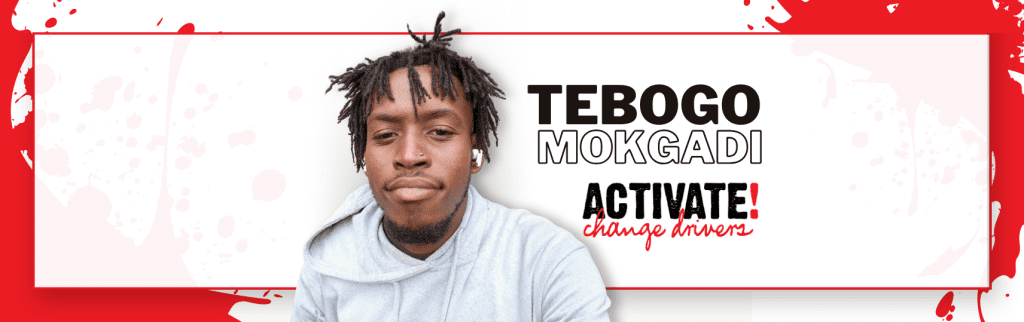
Tebogo Mokgadi is an Activator of the 2025 cohort. Writing was a hobby that gained a strong voice as he wrote for an arts organization, SistaBoss Academy, in the beginning of 2024. Now, he plans on sharpening this tool to tackle societal views that perpetuate the preservation of stereotypes.



Responses