
Gender Justice Begins with Belonging


In a country where gender norms still cast long shadows over public and private spaces, Women’s Month is not just a celebration it’s a reminder of the work that remains unfinished. It’s a call to create spaces where belonging is not earned through conformity but granted as birthright. Because to belong is to be seen. To be safe. To be heard.
This truth lies at the heart of the Generation G programme, a gender justice movement reaching across South Africa and beyond. Comprised of ActionAid South Africa, Sonke Gender Justice and Activate Change Drivers, it confronts systemic inequality at its roots: challenging power, redefining masculinity, and amplifying the leadership of women and youth.
Generation G does not speak about inclusion in theory. It brings it to life. Through youth-led advocacy, intersectional dialogue, and gender-transformative campaigns, the programme builds pathways where girls and women don’t have to beg to be respected, they simply are. From local clinics to national policy rooms, the mission remains the same: bodily autonomy, dignity, and the right to exist in full.
One of those pathways is Sho Bafo, Ugrand? — a campaign that flips the narrative on mental health and masculinity, showing men that healing is not weakness, but wisdom. And when men begin to heal, women begin to breathe. Thabani Kalala, a community mobilizer and Generation G Champion, shares the weight of lived experience:
“My mother raised me and my siblings alone, and I saw firsthand the strength it took to hold everything together. Women go through so much from unpaid care work to fighting GBV. Women’s Month is a time to celebrate their resilience, unlearn what keeps them sidelined, and honour the power they carry. When women rise together, they move mountains.”
Because women’s safety should never hinge on men’s silence. It must be built on shared accountability.
The Gen G Engage app, offering zero-rated access to GBV resources, breaks financial and digital barriers that prevent women from seeking help. It says: you don’t need data to demand dignity. You don’t need permission to seek protection.
But the truth is, justice is not delivered in documents or downloads it happens in rooms, in relationships, in language. It’s in the moment when a girl raises her hand in class and is listened to, not laughed at. It’s when a woman makes a decision without needing validation. It’s when public spaces don’t feel like battlegrounds for existence.
And when these things are missing, the harm echoes across generations. Women learn to shrink. Girls learn to doubt. Communities learn to cope instead of change. Generation G refuses to settle for coping. It teaches that belonging is not a luxury. It is a starting point.

Belonging also means amplifying the voices of those too often pushed to the margins. Neo Iyana Masilela, a transgender activist, life coach and Generation G Champion, understands what it means to navigate the gender space with visibility and vulnerability:
“Belonging in the Generation Gender programme means it’s not only rooted in gender work but also in grace and growth within the gender space. I use my voice, my work and my presence to challenge oppressive systems, while holding sacred space and reimagining what’s possible for a gender-just and free society.”
Neo’s experience calls us to recognise the complexity of womanhood. To be a woman is not just biology it is bravery, identity, and the fight to be fully seen. Inclusivity is not an act of generosity, it’s a necessity. There is no gender justice without trans justice.
This spirit of reimagining extends to frontline work. Nonkosi Mrawushe, a social worker, GBV interventionist and Generation G Champion, reflects:
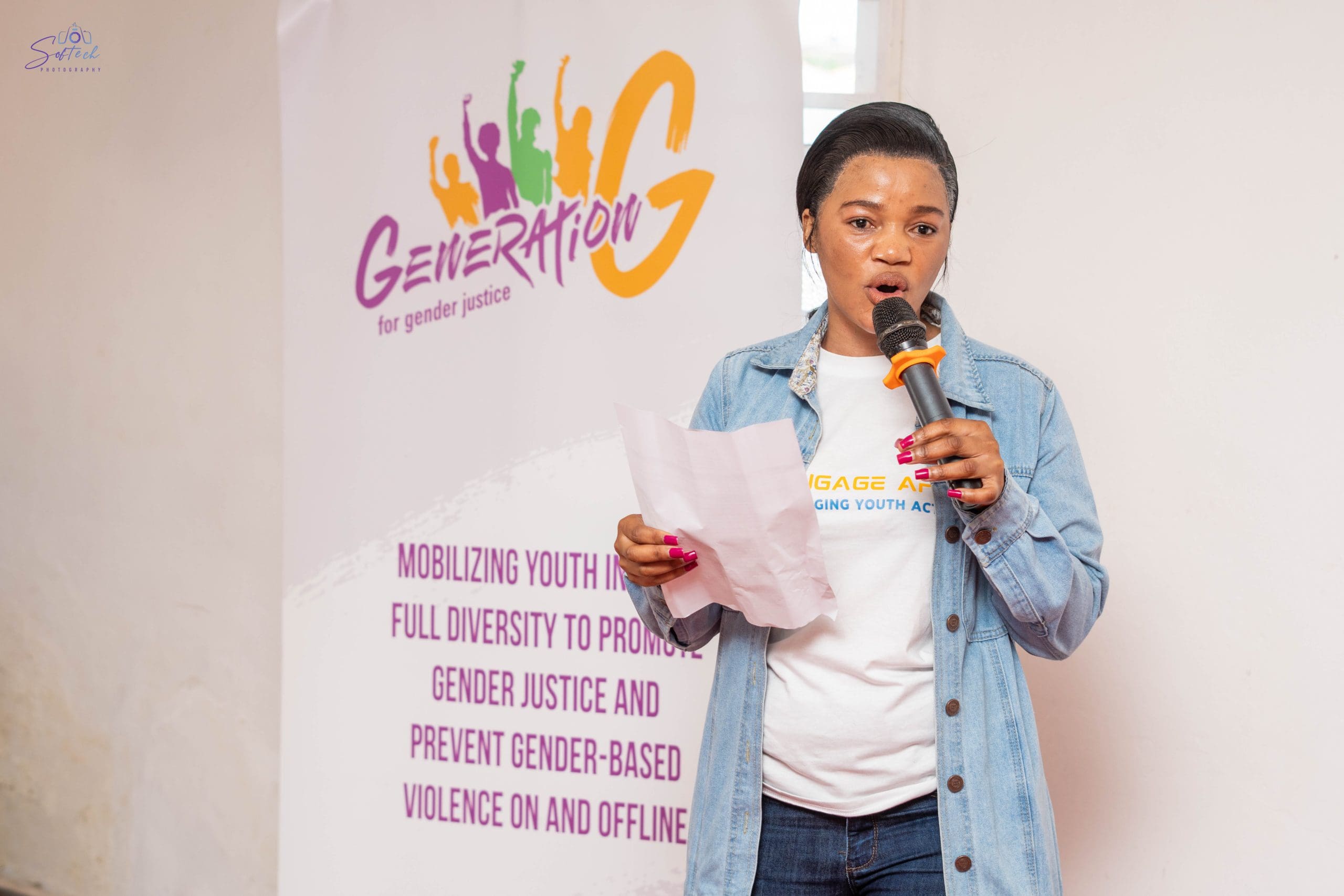
“Through the Generation G programme, my voice is amplified, and my bubble is burst. I’ve overcome my fears, and I have developed an ability to express myself better.”
Voices That Drive the Message Home
When justice is built on belonging, systems shift from exclusion to embrace. These champions don’t just speak equity they embody it. And that’s why celebrating women loudly, daily, and deliberately is not symbolic, it’s strategic. It’s a way of honouring those who hold families together, lead communities, and keep fighting even when no one’s looking.
So this Women’s Month, we ask:
Are we creating spaces where women belong, or just where they survive?
Are our programmes shifting culture, or just ticking boxes?
Are we building systems that embrace difference, or erase it?
Because when women and girls belong, they rise.
They teach.
They heal.
They rebuild.
And that kind of rising can never be ignored.


Responses