
Beyond the Memory of 1976: The Meaning of Youth Day in Modern South Africa

Every Youth Day, South Africans are reminded of the courage of the young people who marched in 1976. Their resistance against an unjust education system remains one of the defining moments in our country’s history. The images, stories and sacrifices of those students have become part of our national memory. Yet every year, as the country reflects on their legacy, I find myself returning to a different question: if Youth Day is meant to celebrate the youth, what does it say about young people in South Africa today?
For me, the answer lies somewhere between remembrance and recognition. The events of 16 June 1976 will always remain central to Youth Day. The students who took to the streets demonstrated that age has never been a barrier to influence. They proved that young people have the ability to challenge systems, shape public conversations and alter the course of history. Their actions remind us that meaningful change often begins with those who are least expected to lead it. However, limiting Youth Day to a historical commemoration risks overlooking another important reality. Young South Africans are still shaping the country today.
The challenges may have changed, but the spirit has not. One need only look at the Fees Must Fall movement to see this continuity. Beginning in 2015, students across the country challenged the rising cost of higher education and demanded greater access for young people from working-class backgrounds. While the circumstances differed from those of 1976, the underlying principle remained familiar. Successive generations of South African youth have consistently demonstrated an ability to identify problems, organise around them and push for solutions.
Yet activism does not only exist in moments of protest. Sometimes it takes place quietly in communities where young people are addressing challenges long before they attract national attention. Londiwe Nkosi is one such example. As an Activator within the ACTIVATE! Change Drivers network, she founded We Navigate after recognising how many young people struggle to access mentorship, career guidance and professional networks. Inspired by the hurdles she encountered in her own professional journey; she launched an educational event called “Unleashing Your Genius” in Benoni in 2019. What began as a self-funded initiative later evolved into a registered non-profit organisation. Today, We Navigate connects students with professionals and corporate institutions through mentorship programmes that provide guidance, exposure and a clearer roadmap towards their desired careers.
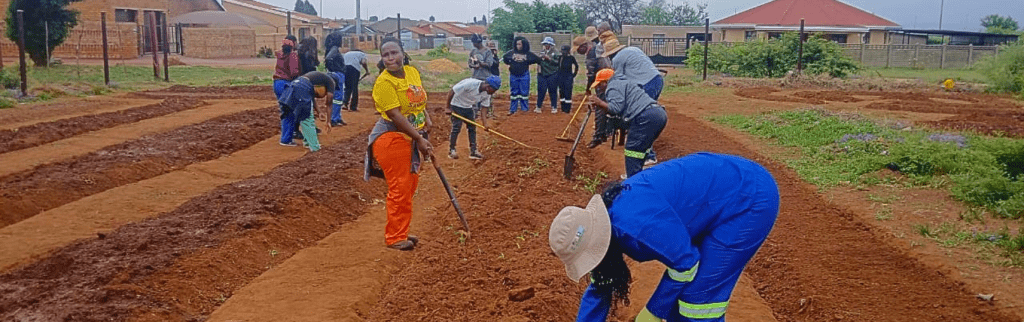
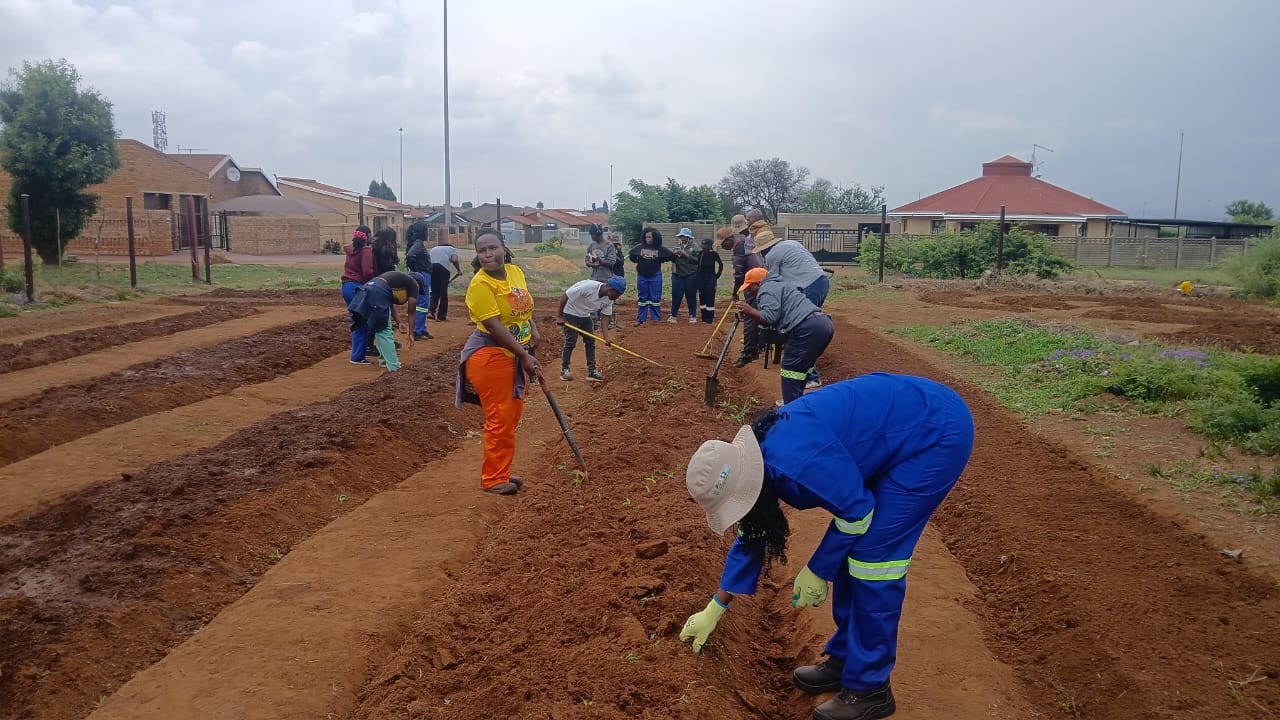
A similar commitment can be found in the work of Matshediso Agnes Masita, a 2025 Activator, devoted wife, mother of two and climate change activist. Through Lesedi la Lethabo Community Centre, a non-profit organisation she co-founded, Matshediso has dedicated herself to strengthening communities through youth empowerment, food security, skills development and agricultural initiatives. From agricultural training and food production projects to youth development programmes and job readiness initiatives, her efforts demonstrate how local action can create meaningful change for entire communities.
These stories matter because South Africa’s youth continue to navigate significant challenges. Statistics South Africa reported that the unemployment rate among people aged 15 to 24 stood at 60.9% during the first quarter of 2026, while unemployment among those aged 25 to 34 stood at 40.6%. These figures are more than numbers. Behind every statistic is a graduate waiting for an interview, a matriculant searching for an opportunity and a young person attempting to build a future in an environment where opportunities are often limited.
Yet despite these realities, many young South Africans continue to demonstrate extraordinary resilience. Increasingly, young people are turning to digital spaces not only for entertainment but for opportunity. Platforms such as YouTube, TikTok and podcasting networks have become spaces where young people earn income, build audiences and establish careers through streaming, vlogs, educational content, comedy skits, dance challenges and creative storytelling. What is particularly remarkable is that many are transforming platforms designed for social interaction into pathways for economic participation.
Previous generations were largely encouraged to seek employment. Increasingly, today’s youth are creating employment, not only for themselves but, in some cases, for others as well. While social media and entrepreneurship cannot solve the country’s unemployment crisis, they reflect a generation that is resourceful, innovative and unwilling to be defined solely by the limitations around it.
This is what makes the work of Activators such as Londiwe Nkosi and Matshediso Masita so significant. Alongside countless other young South Africans, they remind us that activism can take many forms. Sometimes it is a national movement. Sometimes it is a mentorship programme. Sometimes it is a community garden, a skills development initiative or a digital platform that creates income where none existed before. These are heroes of the modern world who deserve recognition on Youth Day as well. They are on the ground, solving practical problems and improving lives through action rather than rhetoric.
Perhaps this is why Youth Day means something different to me today than it once did. It is no longer simply a day of remembrance. It is a day of reflection on how far we have come and how far we still need to go. It is a day that honours the students of 1976, acknowledges the significance of Fees Must Fall and recognises the countless young people who are quietly transforming their communities every day.
Most importantly, it is a reminder that the story of South Africa’s youth did not end in 1976. It is still being written by students, entrepreneurs, innovators, content creators, community leaders and Activators who continue to create opportunities where few exist. The tools may have changed, and the challenges may look different, but the defining characteristic remains unchanged. When young people organise around a shared purpose and commit themselves to improving the lives of others, they become a powerful force for change. Perhaps that is what Youth Day truly represents today: not only the memory of a generation that changed history, but the continued emergence of generations determined to shape the future.
—————————————
About the Author:
Mpho (MrSir) Matlhabegoane is a member of the ACTIVATE! Change Drivers Writers Hub. He became an Activator in 2019. He is a Mental Health Awareness Advocate, and to spread mental health awareness, he authored and published three books that are accepted by Gauteng Department of Education as of 2026, namely: The Story of MrSir (Word For The Record), Expanding The World Of Nerds, and Views and Emotions (Poetry Journal of MrSir).


Responses