
In Komga, Amanda Dumisa Is Turning Mandela Day Into Everyday Work

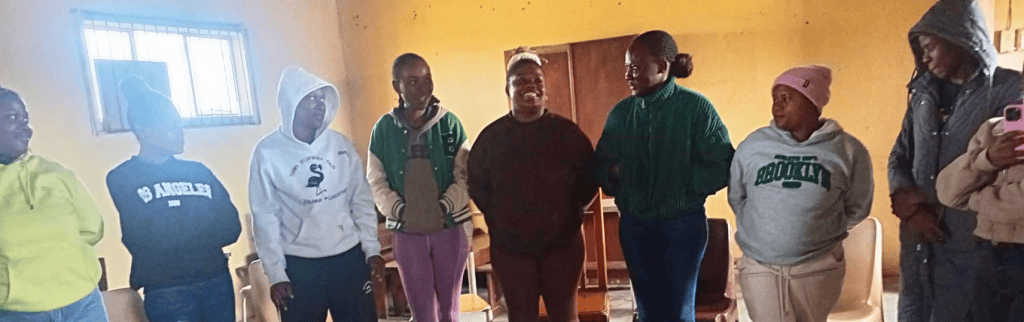
On the first day Amanda Dumisa opened her home to feed people in Komga, it was raining.
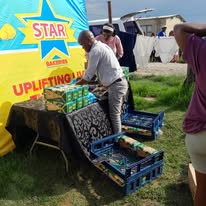
The small office in front of her house was not ready yet, so people came inside. Furniture had to share space with wet clothes, hungry bodies, donated bread and the smell of soup being stretched as far as it could go. Premier Bread had delivered 100 loaves. Amanda had asked around for whatever food donations she could find. There was not enough for everyone that day, but there was enough to begin.
That is how Komga Youth Hub started: not with funding, a building or a polished programme model, but with a young woman opening her door and deciding that waiting for perfect conditions would mean leaving too many people behind.
As South Africans mark Mandela Day on 18 July, a day recognised globally as a call to take meaningful action in our communities, Amanda’s work asks a simple question: what happens when 67 minutes becomes a daily commitment?
Komga is a small Eastern Cape town under the Great Kei Local Municipality, where beauty and hardship sit close together. The area carries the quiet landscape of rural Eastern Cape life, but also the pressure of poverty, unemployment and households that depend heavily on social grants and low-income survival. Nationally, young people continue to face a severe labour market crisis: in the first quarter of 2026, South Africa’s official youth unemployment rate for those aged 15 to 34 stood at 45.8%.
Amanda does not speak about these numbers as statistics. She speaks about young people she knows by name.
“Unemployment is an issue here,” she says. “People are stressed. People don’t have anything to do.” In her community, she has seen how unemployment can feed hopelessness, substance abuse and a feeling of not belonging. Her answer was to create a place where young people could be seen, supported and linked to real opportunities.
Amanda was born and raised in Komga. She did her primary schooling there before leaving for high school, then moved through different provinces looking for work and opportunity. As a young girl, she once wanted to become a pilot. Later, she imagined becoming a civil engineer. But life kept pulling her towards people.
In 2017, she became part of the ACTIVATE! network. Through ACTIVATE!, she was exposed to community development and other young people already doing work on the ground. In Cape Town, she worked in an HIV prevention programme with adolescents and young people, later qualifying as a social auxiliary worker. She also helped run a youth hub with another Activator, doing work around youth development and food insecurity.
But Komga kept calling.
From Cape Town, Amanda would follow community updates online and see the place she came from still struggling with underdevelopment. Eventually, she made a decision that would cost her comfort and certainty: she left her work in Cape Town and returned home.
“Coming back here meant that I had to leave my work in Cape Town,” she says. “It meant that I had to start from the bottom with nothing.”
Today, Komga Youth Hub has become part soup kitchen, part youth employment desk, part school support system and part safe space. Its weekly soup kitchen now serves about 200 children, but only once a week because capacity is limited. The hub has helped two children who were not in school secure placement at Siviwe Public School, including support with uniforms, stationery and school fundraising fees. It has donated school shoes, backpacks, stationery and clothing to underprivileged learners.
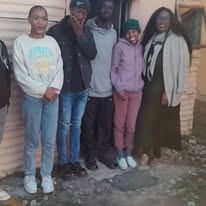
Through its NEET Linkage Programme, Komga Youth Hub has helped about 46 young people into permanent and contract job opportunities. Local businesses contact Amanda when they need a driver, a general worker or someone with a specific skill. Amanda checks her database, connects young people to the opportunity, helps with CVs, and sometimes even uses her own money to transport them to interviews.
This is the part of community work that people do not always see.
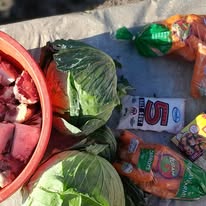
Sometimes the donation covers meat bones, but not onions. Sometimes there are dry ingredients, but no vegetables. Sometimes children are already on the way, and Amanda has to find a way to make the pot stretch. She is not formally funded. She is also a mother. There are days when the work asks from money she does not have.
“I need to also be able to look after myself as a person,” she says. “I have kids as well.”
Still, the work continues.
In May, the hub hosted dialogue circles around issues affecting young people and partnered on a two-day work readiness programme. In June, Amanda and volunteer Aphiwe Panyaza supported 69 Grade 12 learners during an exam preparation camp at Hlumani High School, where learners also engaged in conversations around academics, sexual and reproductive health, exam preparation and the pressures facing young people.
For Amanda, every meal matters. Every learner matters. But opportunity sits closest to her heart.
“Every time we help a young person secure employment, access education, or discover their purpose, we are not only changing one life,” she says. “We are changing the future of an entire family.”
That is why Komga Youth Hub matters. Because in a town where poverty can make futures feel small, Amanda is making room: for a child to eat, for a young person to submit a CV, for a matric learner to prepare, for a vulnerable family to ask for help without shame.
This Mandela Day, the call is not only to admire Amanda’s work. It is to help sustain it.
Komga Youth Hub needs regular food donations, fresh produce, groceries, kitchen equipment, transport support, volunteers, tutoring support, digital literacy resources, work-readiness partners and employers willing to open doors for young people. Amanda’s dream is to serve children more than once a week, grow the food parcel programme, support child-headed households, expand tutoring and career guidance, and build a stronger Komga where young people do not have to leave home to find hope.
“Leadership is not about the position you hold,” Amanda says. “It is about the lives you touch, the opportunities you create, and the hope you leave behind.”
In Komga, Amanda Dumisa is leaving hope behind one meal, one learner and one opportunity at a time.
————————————–
The Receipts: How to Support Komga Youth Hub
Current impact: about 200 children served weekly, 46 young people placed in job opportunities, 69 Grade 12 learners supported during exam camp, school support provided through shoes, uniforms, stationery and clothing.
What they need: food donations, fresh produce, kitchen equipment, funding, transport support, volunteers, tutoring partners, work-readiness partners, digital literacy resources and employers who can offer jobs, internships or learnerships.
Contact: Komga Youth Hub
Email: komgayouthhub@gmail.com
Phone: 078 200 0714
————————————–
About the Author:
Ramadimetja Kekana is a freelance writer whose work focuses on social justice, mental health, education and youth development. Through her writing, she seeks to raise awareness, deepen understanding and spark meaningful reflection on the issues affecting young people and marginalised communities. Her work is rooted in storytelling that is thoughtful, human-centred and socially conscious, with a particular interest in amplifying underrepresented voices and community-led solutions.






Responses