A! Diversity: Amplifying Youth Voices and Championing Disability Rights in South Africa

In South Africa, approximately 3.3 million individuals are living with disabilities, representing a significant portion of the population (Stats SA, 2024). Yet, too often, their voices remain unheard, their needs unmet, and their potential unrealised. This October, the youth network Activate! Change Drivers launched the A! Diversity campaign, a bold initiative to shine a spotlight on differently abled youth and challenge the systemic barriers that continue to marginalise them.
“People living with disabilities often face significant barriers to participation in various programmes and activities. These barriers can be physical, social, or attitudinal, and they can prevent individuals with disabilities from fully engaging with and benefiting from initiatives designed for the general population,” said Nomthandazo Shabangu, network coordinator for Activate!.
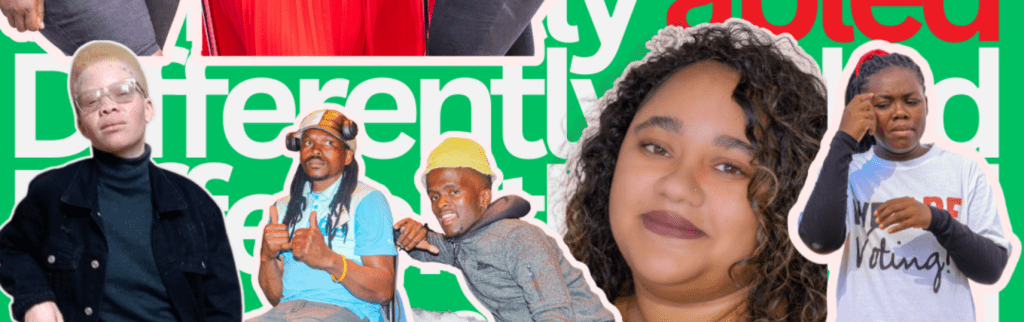
The campaign is not just a month-long awareness drive, but it is a movement to shift culture, amplify youth voices, and create tangible pathways for inclusion. Through physical focus groups, webinars, podcasts, and multimedia engagements, A! Diversity positions young people with disabilities at the centre of civic discourse, ensuring accessibility and responsiveness to their needs.
The Landscape of Disability in South Africa
Globally, the World Health Organisation estimates that recent estimates suggest the number is closer to 1.3 billion people, representing 16% of the global population. This prevalence is increasing due to factors like population ageing and the rise of chronic health conditions. In South Africa, while the prevalence of disability has decreased from 7.4% in 2011 to 6.0% in 2022 (Stats SA, 2024), disparities remain, particularly among youth. Social isolation, unemployment, and limited access to education create systemic barriers that prevent many young people with disabilities from fully participating in society. Alarmingly, 71% of youth with disabilities in South Africa are unemployed, highlighting an urgent need for inclusive structures that support equal access to opportunities (National Youth Policy, 2020-2030).
Moreover, the South African Human Rights Commission’s Disability Toolkit emphasises that persons with disabilities have the right to full and effective participation and inclusion in society (SAHRC, 2020). Despite this legal framework, societal attitudes and infrastructural barriers often prevent meaningful participation. A! Diversity directly addresses this gap by fostering platforms where young people can advocate for their rights, be heard, and influence decision-making processes.
Youth Leadership and Disability: The Intersection of Advocacy
Youth activism in South Africa has historically been a powerful agent for change, from anti-apartheid movements to contemporary campaigns for climate justice and social equity. For young people with disabilities, however, advocacy comes with additional challenges. The Convention on the Rights of Persons with Disabilities and Optional Protocol (CRPD, 2006) affirms that “States Parties shall ensure that persons with disabilities can effectively and fully participate in political and public life on an equal basis with others” (Article 29). Yet, without active platforms for engagement, this right remains theoretical for many.
The A! Diversity campaign recognises the transformative potential of youth leadership. By centring differently abled youth in both the design and execution of the campaign, Activate! Cultivates a culture of participatory democracy and civic responsibility. For instance, physical focus groups encourage dialogue between youth and community leaders, while online webinars and podcasts extend these conversations to a broader audience, ensuring inclusivity and accessibility.
It is therefore essential that we create platforms that are inclusive, accessible, and responsive to the needs of people with disabilities. On this premise, we call on young people and civil society to support the amplification of our efforts and join the A! Diversity campaign.
Positive Impacts: Transforming Mindsets and Building Capacity
Initiatives like A! Diversity are not only raising awareness but actively reshaping societal perceptions. Campaigns that foreground the capabilities of youth with disabilities help dismantle harmful stereotypes and encourage a more inclusive South African society. The Disability-Inclusive Language Guidelines recommend avoiding terms that define individuals by their limitations and instead promote recognition of their agency and contribution (DAIS, 2022). By employing inclusive language and accessible content, Activate! Ensures that its messaging reflects these principles.
Through structured workshops, young participants learn advocacy skills, develop leadership capacities, and gain confidence in their abilities to influence public discourse. This hands-on approach echoes the White Paper on the Rights of Persons with Disabilities, which underscores the importance of creating enabling environments where persons with disabilities can exercise their rights and participate fully in society” (Republic of South Africa, 2015).
Challenges: Unemployment, Social Isolation, and Attitudinal Barriers
Despite these advancements, challenges persist. Many youth with disabilities experience social isolation and marginalisation, compounded by high unemployment and limited access to education. Physical infrastructure, transport systems, and digital platforms are often inaccessible, further restricting participation. Societal attitudes—ranging from paternalism to outright discrimination—also serve as significant obstacles.
Globally, research shows that youth with disabilities are disproportionately affected by unemployment and mental health challenges. The World Health Organisation notes higher rates of depression among young people with disabilities, often linked to social exclusion and lack of opportunity (WHO, 2021). Locally, the National Youth Policy 2020-2030 advocates for targeted programs to promote the inclusion and empowerment of youth with disabilities, making initiatives like A! Diversity critical for progress.
Why A! Diversity Matters
A! Diversity demonstrates that inclusion is more than a policy; it is a culture. By designing programs with youth, for youth, the campaign empowers those traditionally excluded. It asks us all: Who is being left out, and why are we letting them?
Activate! Change Drivers exemplifies a holistic approach: combining advocacy, capacity building, and tangible engagement to strengthen democracy and promote equity. People living with disabilities often face significant barriers to participation in various programmes and activities. These barriers can be physical, social, or attitudinal in nature.
This statement underscores the campaign’s core message: inclusion is an active, deliberate practice, not a passive aspiration.
Looking Ahead: Sustaining the Movement
While October commemorates the A! Diversity campaign, its principles extend far beyond a single month. Activating youth leadership, challenging societal norms, and providing accessible platforms for engagement are ongoing processes. Continued collaboration with civil society organisations, municipalities, and schools is critical to embed these values across South African communities.
The campaign’s focus on youth empowerment also reflects broader democratic imperatives. South Africa’s youth constitute over 35% of the population (Stats SA, 2024). Ensuring their voices, particularly those of youth with disabilities, are heard and respected strengthens democratic participation, fosters social cohesion, and builds resilient communities.
Conclusion
The A! Diversity campaign serves as a potent reminder: when inclusion is prioritised, society thrives. By centring youth with disabilities, Activate! Change Drivers bridges gaps in opportunity, representation, and access. Through advocacy, skill-building, and community engagement, this campaign not only celebrates the capabilities of differently abled youth but also sets a precedent for inclusive youth-led initiatives across South Africa.
October may end, but the message of A! Diversity remains. As we reflect on this campaign, one question emerges: How can we ensure that the voices of all youth, especially those living with disabilities, are never sidelined again?
In answering this, we honour the principles of human dignity, equity, and Ubuntu, laying the groundwork for a society where every young person can thrive, participate, and lead.
—————————————
References:
- Statistics South Africa. (2024). General Household Survey. Pretoria: Stats SA.
https://www.statssa.gov.za/?cat=18 - World Health Organisation (WHO). (2021). Mental Health of Young People with Disabilities. Geneva: WHO.
https://www.who.int/news-room/fact-sheets/detail/disability-and-health#:~:text=Key%20facts,than%20for%20those%20without%20disabilities. - National Youth Policy (2020-2030). A decade to accelerate positive youth development outcomes. https://www.gov.za/sites/default/files/gcis_document/202103/nationalyouthpolicy.pdf
- South African Human Rights Commission (SAHRC). (2020). Disability Toolkit.
20170524 SAHRC Disability Monitoring Framework and guidelines Draft 5.pdf - Convention on the Rights of Persons with Disabilities and Optional Protocol (CRPD, 2006).
https://www.ohchr.org/en/instruments-mechanisms/instruments/convention-rights-persons-disabilities - Disability-Inclusive Language Guidelines (Dais, 2022).
https://www.ungeneva.org/sites/default/files/2021-01/Disability-Inclusive-Language-Guidelines.pdf - Republic of South Africa. (2015). White Paper on the Rights of Persons with Disabilities.
https://www.gov.za/sites/default/files/gcis_document/201603/39792gon230.pdf
—————————————
About the Author:
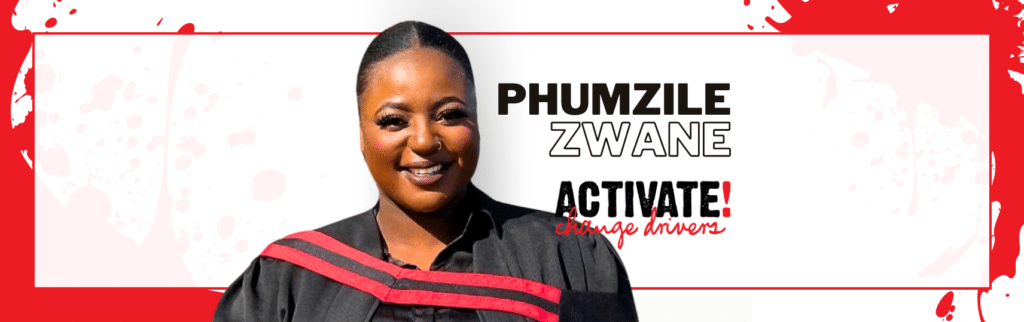
Phumzile “Phumi” Zwane is part of the Activate! Change Drivers Writing Hub, where she uses storytelling to spark dialogue on democracy, youth leadership, and social justice. Passionate about amplifying young voices and fostering inclusive change, she brings her background in marketing and communications into her writing blending.


Responses